
Homes for Sale in Union City, Michigan
Search all available listings, view market trends, and get expert guidance from Edward Kalavitz — your dual-licensed Union City Realtor and Mortgage Loan Originator with 25+ years of experience.
Realtor License #6501386956 · Turnkey Realty LLC • NMLS #138424 · Private Mortgage Guarantee LLC
In This Guide
- Market Dashboard
- Today’s Rates in Union City
- Michigan Mortgage Advisor
- Homes for Sale in Union City
- About Union City
- Neighborhoods & Subdivisions
- Property Types
- Schools & Education
- Cost of Living & Taxes
- Market Trends
- Mortgage Options in Union City
- Buying in Union City
- Selling in Union City
- Edward’s Local Take
- Watch: Meet Edward
- Nearby Cities
- Google Reviews
- Union City FAQ
- Available Hours
Union City Real Estate Market Dashboard
Mortgage Rates in Union City
Competitive pricing personalized to your scenario. Rates shown reflect 740+ credit, 30-year fixed terms unless noted.
Purchase Loans
Conventional Purchase
15-Year Conventional
FHA 30-Year Purchase
VA 30-Year Purchase
USDA Purchase & Refinance
USDA 30-Year Purchase
FHA Streamline Refi
Conventional Refinance
Jumbo & High-Balance
Jumbo / High-Balance
Not Sure Which Loan You Qualify For?
See the rates. Not sure which loan fits your situation? The Michigan Mortgage Advisor answers that in 60 seconds — analyzing your credit, down payment, and goals to recommend the best loan program and show you your real monthly payment on Union City Michigan real estate.
- Instant loan-type recommendation — FHA, VA, USDA, or Conventional
- Live rate and APR for your exact scenario
- Michigan-specific closing cost estimate
- No credit check required to start
Best loan for you: FHA
3.5% down
~$1,830/mo principal + interest
Your actual recommendation is calculated live based on your inputs.
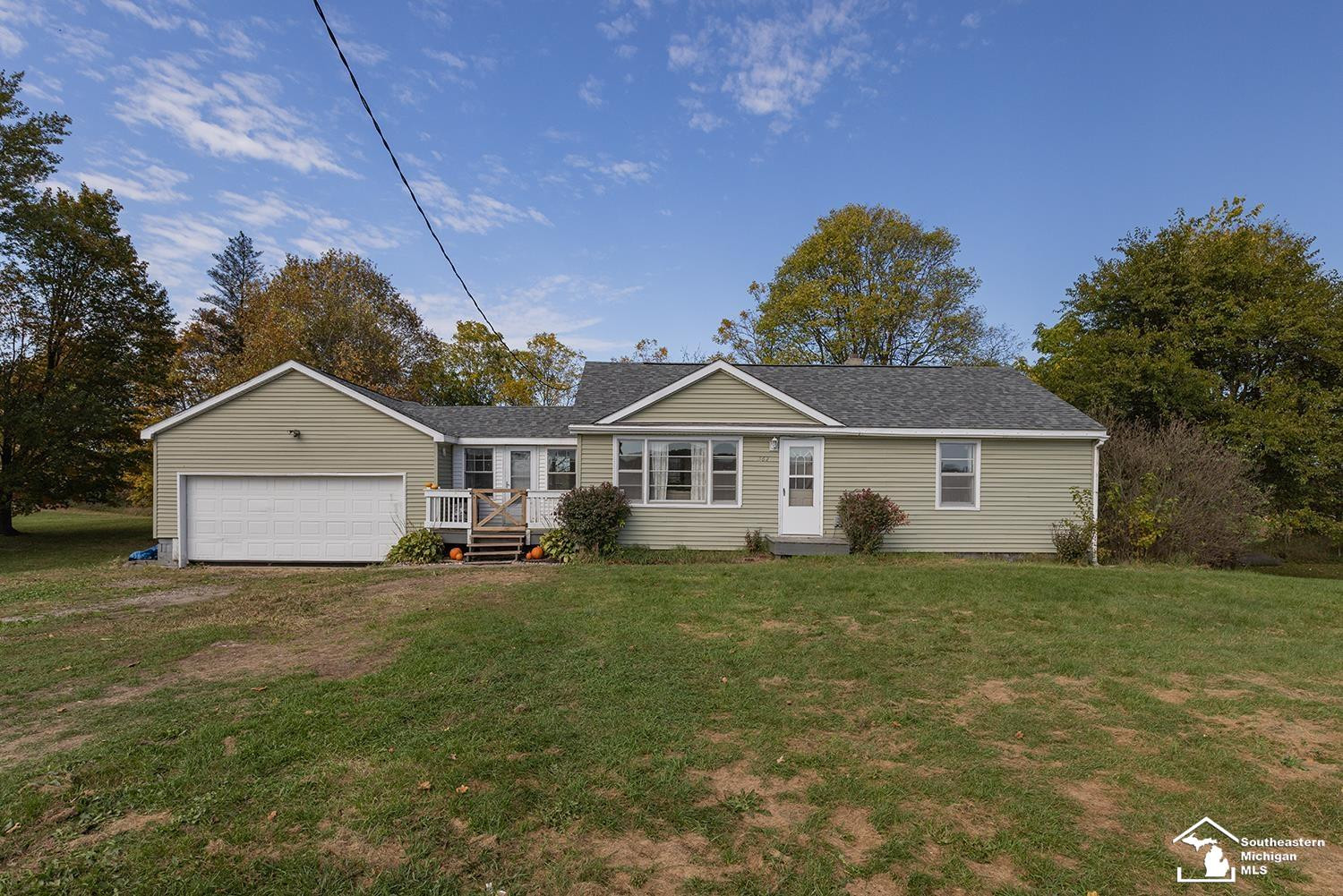
Featured Union City Listings
Premium properties in the Union City area, $500K and above.


Browse Active Union City Listings


Filtered ZIPs: 49094 · · · · · · 49525
About Union City, Michigan
Union City is a village of roughly 1,714 residents at the junction of the Coldwater River and St. Joseph River. Most of the community sits within Union Township in Branch County, with a small portion extending north into Burlington Township in Calhoun County. The name derives from the union of those two rivers that meet within the village area. Total area is about 1.49 square miles, almost entirely land, and the community is served by ZIP code 49094.
Surveyor Robert Clark first mapped the area in 1826, and Isaiah Bennett purchased the first plot of land in 1831. Justus Goodwin bought a large piece of Bennett’s land in 1833, built a mill, and became the first postmaster when a post office opened on November 9, 1834 under the name Goodwinville. In 1835 E. W. Morgan platted the community and named it Union City; the post office was renamed to match on January 23, 1840. The village incorporated in 1866.
The community was designated Station No. 2 of the Underground Railroad. John D. Zimmerman, who arrived from Fairfield, Connecticut in 1838, served as stationmaster, hiding escaped slaves in a Greek Revival house he built around 1840 at 119 East High Street — now a Michigan State Historic Site.
The local economy combines small-village commerce, agricultural activity across surrounding Branch and Calhoun County townships, and a hydroelectric heritage that dates to the early 1920s, when the village built a plant to deliver cheaper electricity. Riley Dam followed in 1923 on the St. Joseph River, and its backwater created Union Lake — still a defining recreational and residential feature of the area today.
Union City Community Schools anchors family stability, and the village’s annual Meteor Festival in early July supports a small but consistent visitor economy tied to its literary connection through children’s author Patricia Polacco, who lives at Meteor Ridge Farm.
Neighborhood Guide · Union City, MI
Union City Neighborhoods
The village’s residential areas are organized around the river-junction historic core, the Union Lake shoreline created by Riley Dam in 1923, the Community Schools campus blocks, and the rural-residential parcels along M-60 and the surrounding township roads. Inventory ranges from compact village-core homes to lakefront properties and larger rural lots.
Union City Village Core
The historic village center sits at the confluence of the Coldwater River and St. Joseph River, on land first platted by E. W. Morgan in 1835 and incorporated as a village in 1866. Inventory here is dominated by late-19th-century and early-20th-century homes, including the Zimmerman House at 119 East High Street — a Michigan State Historic Site that served as Station No. 2 of the Underground Railroad and is built in the Greek Revival style of the 1840s.
Lots are typically compact on a traditional village grid, with sidewalks running through much of the older core and village services within a short walk.
Walkability: Walkable village grid with sidewalks throughout the historic core; village amenities and the river-junction parks reachable on foot within five to ten minutes.
Buyer fit: Common among buyers prioritizing small-village character, mid-19th-century architectural detail, and walkability to the historic core — particularly retirees, remote-work professionals trading metro access for community continuity, and history-minded households drawn to the Underground Railroad legacy.
Union Lake Area
Homes around Union Lake — the backwater impoundment created when Riley Dam was constructed on the St. Joseph River in 1923 — make up the lakefront and lake-adjacent housing stock. Inventory includes year-round residences, lake cottages built over the last century, and some newer infill construction on parcels with shoreline frontage or short walks to public water access.
Lot sizes vary considerably by shoreline position, and waterfront premiums apply to direct-frontage parcels versus second-tier lake-view homes set back from the water.
Walkability: Drive-oriented lakeside lanes; the lake setting is the daily-life centerpiece rather than walkable shopping access.
Buyer fit: Common among buyers prioritizing lakefront living, summer water recreation, and a relaxed year-round setting — particularly second-home buyers, retirees downsizing to a lake property, and remote-work households willing to drive into the village core for services.
Union City Community Schools Area
Residential blocks closest to the Union City Community Schools campus contain the area’s family-housing concentration. The district operates Union City High School plus elementary and middle-school facilities, and households tend to favor walk-and-bike distance to schools, sidewalk-served streets, and the kind of consistent ranch and two-story stock common in small Michigan village build-outs from the mid-20th century forward.
Inventory includes a mix of older renovated homes and post-war and later-20th-century single-family construction on standard residential lots.
Walkability: Sidewalk-served residential streets; walking and biking distance to the Community Schools campus for many households.
Buyer fit: Common among families prioritizing district-anchored housing, walkability to school facilities, and predictable single-family stock — particularly first-time buyers, growing families, and households relocating into Branch or Calhoun County for stability rather than acreage.
River Confluence Heritage Area
The blocks immediately surrounding the Coldwater River and St. Joseph River junction carry the village’s deepest founding-era heritage. The naming inspiration for the community itself lies here, and the original 1830s platting under E. W. Morgan extended outward from the riverside. Inventory mixes restored historic homes, smaller infill parcels, and properties with riverfront or river-adjacent character.
Buyers in this pocket value the confluence setting, the proximity to the Underground Railroad heritage site at 119 East High Street, and the visual character of mature trees along the river corridors.
Walkability: Drive-oriented for shopping; walkable to the river-junction park areas and the historic core within five to ten minutes.
Buyer fit: Common among buyers prioritizing river-confluence setting, Michigan historic-site proximity, and founding-era village character — particularly history enthusiasts, restoration-minded buyers, and households seeking a distinctive sense of place over square-footage maximization.
M-60 Corridor
Parcels along the M-60 corridor on the village’s northern edge anchor the area’s drive-oriented residential stock. M-60 connects Union City westward toward Three Rivers and eastward toward Homer and points beyond, giving households along the corridor predictable highway access for daily commutes and regional errands.
Inventory ranges from village-edge single-family homes on standard lots to larger rural-residential parcels as the corridor moves out toward the surrounding townships.
Walkability: Drive-oriented; the corridor prioritizes highway access over pedestrian connectivity.
Buyer fit: Common among commuters working in Coldwater, Battle Creek, or Marshall, buyers wanting larger lots than the village core offers, and households prioritizing predictable east-west road access. Also common among trade and service workers driving routes across Branch and Calhoun counties.
Greater Union City Rural Residential
The broader band of rural-residential housing in Union Township (Branch County) and the small Burlington Township (Calhoun County) overlap extends outward from the village edge. Inventory here trends toward larger lots, hobby-farm parcels, mid-20th-century ranches, and a smaller share of newer rural-build single-family homes.
Households along these township roads typically drive into the village for services and into Coldwater or Battle Creek for fuller retail and healthcare. Lot sizes, well-and-septic systems, and outbuilding potential are common differentiators in this pocket.
Walkability: Drive-oriented rural setting; daily-life errands require a vehicle.
Buyer fit: Common among year-round residents prioritizing lot size, privacy, outbuilding potential, or modest hobby-farm capacity — particularly trades workers, retirees who want acreage rather than walkability, and families moving out from denser Battle Creek or Kalamazoo for space.
Property Types in Union City
Single-Family Homes
Detached single-family housing dominates the local inventory, spanning the historic village core’s late-19th and early-20th-century stock, mid-20th-century ranches in the Community Schools blocks, and newer rural-residential builds along the township roads. Most broader-block inventory clears in the $180K-$340K range, with lake-adjacent and premium-condition homes pushing into the upper band.
Condos & Townhouses
Attached condo and townhouse inventory is modest by design — a small-village market does not generate large multi-unit complexes. Available units tend to be smaller-scale conversions or limited townhouse projects, and they price below comparable single-family homes. Common among downsizing retirees, first-time buyers, and households wanting lower exterior-maintenance commitments.
New Construction
New-construction activity is limited rather than absent. Most newer builds appear as infill on existing village lots or as custom rural-residential homes on township parcels, rather than as large subdivision build-outs. Buyers who want a brand-new home generally plan a longer search window and lean on a builder relationship — Edward can connect clients into the active Branch / Calhoun County builder set.
Investment Properties
Rental inventory in the village and surrounding townships is anchored by workforce demand across the Branch County agricultural and trades economy plus the Battle Creek commuter draw. Smaller single-family rentals and a limited duplex inventory carry most of the activity. Investor buyers typically run the cap-rate math against Coldwater and Quincy comparables before deciding which village to weight.
Waterfront Homes
Union Lake — created when Riley Dam was constructed in 1923 — defines the local waterfront market. Direct-frontage parcels carry waterfront premiums and move quickly when listed; lake-view and second-tier lake-adjacent properties offer a softer entry point. Stretches of the St. Joseph and Coldwater rivers also yield occasional river-frontage inventory at varying price points.
Luxury Homes
Higher-end inventory in the local market concentrates on premium Union Lake-area properties, larger rural-residential estates with acreage, and select restored historic homes in the founding-era village core. The ceiling is moderate by metro-Detroit standards, but the top of the local band typically combines waterfront frontage, larger lot size, or significant historic-property restoration.
Union City Schools & Education
Union City households are primarily served by Union City Community Schools, the district that operates the area’s K-12 facilities. Surrounding Branch and Calhoun County districts and a regional set of private, parochial, and higher-education options round out the picture for families planning multi-year educational pathways.
Union City Community Schools
The public district serving the village and surrounding township area operates Union City High School plus elementary and middle-school facilities. As the area’s anchor district, it carries the day-to-day enrollment for most families who buy within the village limits and the immediately adjacent township blocks.
Because Union City spans the Branch / Calhoun county line and the district’s boundaries cross municipal lines, some properties on the geographic edges may have assignment nuances that differ from the village’s central blocks. Edward verifies the specific district and school assignment for any property under consideration during the buyer consultation, so families relocating from out of area or transitioning between districts know exactly where their children will attend before going under contract.
Private & Parochial Options
The broader Branch and Calhoun County region includes a set of private and parochial schools that draw students from across the smaller villages and rural areas. Coldwater (about 18 minutes south) and Battle Creek (about 30 minutes north) carry the bulk of those options, giving Union City families a practical commute window for non-public schooling.
Tuition, religious affiliation, and grade-level offerings vary significantly across these schools. Families evaluating private or parochial enrollment typically confirm transportation logistics — whether a family-provided commute or any limited shuttle arrangements — alongside the academic and cultural fit before committing to a specific school.
Higher Education Access
For post-secondary planning, Kellogg Community College in Battle Creek is within practical reach at roughly a 30-minute drive, and the broader regional higher-education sector — including Western Michigan University and other institutions in the Kalamazoo metro about 55 minutes northwest — gives Union City households four-year, community-college, and trade-program options without relocating.
Households planning multi-generational stability often weigh this regional access when comparing Union City to smaller villages farther from a college town. The practical drive time to Battle Creek and Kalamazoo makes commuter-student paths workable for families that want to keep a high-school-age student at home while transitioning into college coursework.
School district boundaries cross municipal lines and assignments shift periodically. Confirm exact district assignment for any specific property with Edward — he verifies district and enrollment options as part of the buyer consultation.
Cost of Living & Property Taxes in Union City
One of the biggest advantages of Union City Michigan real estate is affordability relative to comparable metro areas. Here’s what it costs to live in Union City.
$184,048
Avg. Home Price
$50,000
Median Household Income
—
Property Tax Rate
Property Taxes
Union City property taxes are calculated on a home’s taxable value — roughly 50% of market value in Michigan — multiplied by the local total millage rate (city or township + county + school + intermediate school district). Your exact tax depends on the specific property and jurisdiction within the Union City area; Edward provides a precise estimate for any home you’re considering.
If the home is your primary residence, file the Michigan Principal Residence Exemption (PRE) — it removes 18 mills (the local school operating millage) from your tax bill. On an average-priced Union City home, the PRE saves roughly $830 per year, typically 30–40% of total property taxes. The PRE is filed once at closing and stays in effect as long as you live in the home.
Cost Comparison
Michigan offers among the lowest costs of living in the Great Lakes region. Housing, property taxes, and — since the 2020 no-fault auto insurance reform — vehicle insurance all run below national averages, and Michigan has no local income tax in most jurisdictions. For buyers relocating from higher-cost metros, that combination means a given budget reaches noticeably further in Union City than in comparable out-of-state markets.
Within Union City, the real cost variable is neighborhood and property type rather than the city overall. Edward walks buyers through total monthly cost — mortgage, taxes, insurance, and utilities — for any specific Union City home so the comparison is grounded in real numbers, not averages.
Union City Market Trends
Understanding market trends helps buyers and sellers make better decisions in the Union City Michigan real estate market. Here’s what the data shows.
Key Trends for 2026
Prices rising steadily
Union City home values continue to appreciate, outpacing the national average.
Low inventory
Current supply is well below a balanced market (typically 4–6 months), meaning demand significantly exceeds available homes.
Fast-moving market
Well-priced homes in desirable neighborhoods sell in under 2 weeks. Buyers need pre-approval ready.
Spring/summer peak
Historically, Union City sees the strongest buyer activity from April through August.
New construction increasing
Developers are adding inventory in suburban areas, but supply still lags demand.
Mortgage Options for Union City Homebuyers
This is where Edward Kalavitz gives you an advantage no other Union City Realtor can match. As a dual-licensed Realtor AND Mortgage Loan Originator, Edward handles both your home search and your financing — saving you time, money, and the hassle of coordinating between multiple professionals.
FHA Loans
№ 013.5% down with credit scores as low as 580. The most popular choice for Union City first-time buyers. Lower down payment and more flexible qualification.
Conventional Loans
№ 023-20% down with credit scores of 620+. Competitive rates and no upfront mortgage insurance with 20% down. Best for buyers with strong credit.
VA Loans
№ 030% down for veterans and active military. No monthly PMI. The best loan program available — if you qualify, Edward will make sure you use it.
USDA Loans
№ 040% down — Union City limits ARE USDA-eligible for zero-down loans. However, nearby communities in Branch County (Athens, Sherwood, Burlington, Tekonsha, and Algansee) ARE eligible for zero-down USDA loans. Income limits apply (typically 115% of area median income).
MSHDA Down Payment Assistance
№ 05Up to $10,000 in down payment help from the Michigan State Housing Development Authority. Income limits apply — Edward checks eligibility at your consultation.
Payment Calculator
№ 06See exactly what a Union City home costs per month. Try our free mortgage calculator or affordability calculator.
Buying a Home in Union City — Step by Step
Whether you’re a first-time buyer or experienced homeowner, here’s how to buy in the Union City Michigan real estate market with Edward Kalavitz handling both your Realtor and mortgage needs.
Get Pre-Approved (Free)
Call Edward at (616) 633-3692 or apply online. He’ll compare FHA, VA, USDA, and conventional options simultaneously and issue your pre-approval letter — typically within 24 hours. This tells sellers you’re a serious, qualified buyer.
Search Homes in Union City
With pre-approval in hand, Edward helps you search Union City neighborhoods that match your budget and lifestyle. As your Realtor, he can schedule showings, provide neighborhood insights, and run live payment scenarios as you tour homes.
Make an Offer & Negotiate
When you find the right home, Edward writes your offer with competitive terms informed by current Union City market data. In a fast-moving Union City market, having a Realtor who understands both the real estate and financing side gives you a strategic advantage.
Inspection, Appraisal & Closing
Edward manages the entire pipeline — home inspection coordination, appraisal ordering, title work, underwriting, and closing preparation. One point of contact through the entire process.
Welcome Home to Union City!
On closing day, you sign final documents and receive your keys. Edward ensures every number is accurate and every fee is verified. You’re now a Union City homeowner.
Edward’s Selling Advantage
Selling Your Home in Union City
Selling a home in Union City in 2026 rewards preparation. Accurate pricing from day one, professional presentation, and strategic timing are what separate listings that attract strong offers from those that linger on the market. Edward’s dual-license perspective — licensed Realtor and Mortgage Loan Originator — means he prices with both sides of the transaction in view, and can pre-qualify incoming buyers to keep your closing on track.
As your listing agent, Edward Kalavitz handles every step of the local selling process — comparative market analysis using current Union City comps in your specific neighborhood, professional pricing strategy informed by 25+ years of Michigan real estate experience, MLS listing on the Edward’s statewide MLS network (Water Wonderland Association, Realcomp II Limited, Northern Great Lakes MLS, MiRealSource, MichRIC, and Greater Lansing Association of REALTORS), professional photography and digital marketing, open house scheduling, offer negotiation, and full coordination through inspection, appraisal, and closing.
Most Union City sellers find that listing in April through August captures the strongest buyer activity — but well-priced homes sell year-round in this market.
Edward’s dual license as both a Michigan Realtor (#6501386956) and Mortgage Loan Originator (NMLS #138424) gives sellers a meaningful advantage that single-licensed agents simply can’t match.
When offers come in, Edward immediately vets each buyer’s financing strength with a lender’s eye — flagging weak pre-approvals before you accept an offer that might fall through, identifying buyers whose lock periods are about to expire, and reducing the risk of a deal collapsing in underwriting two weeks before close. In a fast market like Union City, fewer fall-throughs means faster, more certain closings.
Before you list, run the numbers. Edward’s Seller Net Sheet Calculator shows your estimated proceeds after agent commissions, title fees, transfer taxes, and remaining mortgage payoff — so you know exactly what you’ll walk away with before you sign a listing agreement. For a free home valuation and listing strategy consultation, call Edward at (616) 633-3692.
Edward’s Local Take on Union City

Twenty-five years working across this part of Michigan, here’s the practical truth about Union City. The village punches above its size on character — river-junction setting, deep Underground Railroad heritage, a lake created in 1923, and a small-but-loyal annual festival economy. Buyers who win here line up their priority first and shop the right pocket of the village or the surrounding townships, instead of treating it as one undifferentiated market. Below is how I help buyers organize the decision when they call me.
Edward Kalavitz
Watch: Meet Edward
Get to know Edward Kalavitz — learn how he helps Union City Michigan families buy, sell, and finance homes with dual-licensed real estate and mortgage expertise.
Nearby Cities
Exploring the Union City Michigan real estate market but open to nearby communities? These cities are all within a short drive and offer different price points and neighborhood character — explore each one’s listings below.
What Clients Say About Working with Edward
Edward is a dual-licensed Realtor & Mortgage Loan Originator. Reviews include clients from both his real estate and mortgage practices.
“Very Professional and Thorough”
“Edward is very professional and thorough. Had a great experience working with him. Everything went very smooth.”
“Great to Have 2 in 1”
“Ed was very responsive, knowledgeable, and made our first home buying experience great! He’s a relator and lender, which was great to have “2 in1”. We were able to look at houses and run number the same day. He was very flexible with times we needed to set up showings, as well as very informative and organized with paperwork! I appreciate his expertise greatly!”
“Works Hard 24/7”
“Ed is wonderful to work with! He is very thorough, experienced, and friendly. Ed works hard 24/7 to give you the best mortgage experience and is always able to help with whatever you need!”
“Above and Beyond”
“Edward is a great relator and loan officer. He helped my fiance and I buy our first home. We called him back when we were ready to sell and buy our forever home. He again went above and beyond to make the process swift and easy. I recommend him to my friends and family who are looking into buying, selling or refinacing their home!”
“Closing Came Sooner Than Anticipated”
“Edward was up front, professional and most helpful in first determining if I was a good candidate for a mortgage re-Fi. My case was Probably not the easiest , however, he made my “homework” manageable. The closing came sooner than anticipated , thanks to his perseverance, knowledge and professionalism .”
“Not Only My Realtor — My Friend”
“Edward was an excellent help in the most stressful time of my life. My son passed away in 2018 and I had to sell his home. Edward alleviated some stress by being patient, organized and communicated thoroughly the entire process. He not only was my realtor/loan officer but he was my friend! Highly recommend him for any home needs!”
Recently Sold Homes in Union City


Union City Commute & Transportation
The community’s commuting picture is shaped by M-60 across the northern edge, I-69 access via Coldwater to the south, the broader Branch and Calhoun County road network, and regional air service through the Kalamazoo/Battle Creek airport. Most households orient their daily routine around one or two of these corridors.
M-60
M-60 runs along the village’s northern edge, providing the area’s primary east-west state-highway connection. The corridor links toward Three Rivers and points west, and eastward toward Homer and the broader I-69 / I-94 system, giving Union City households a predictable route for daily commutes and regional travel without funneling all traffic through a single interstate ramp.
I-69 Access
Interstate 69 sits roughly 18 minutes south of the village via Coldwater, opening up regional north-south travel toward Lansing and Fort Wayne. For households commuting to jobs in the Marshall or Battle Creek corridor or for any travel that benefits from interstate-grade road conditions, the Coldwater I-69 ramp is the practical access point.
Local Network
Branch County and Calhoun County maintain a dense network of county and township roads that connect the village to surrounding agricultural townships, lake areas, and smaller villages — Quincy, Athens, Sherwood, Burlington, and Tekonsha among them. For trades workers, agricultural-economy commuters, and households running routes across the two counties, this local network often matters more than any single highway.
Regional Air Access
Area residents typically use Kalamazoo/Battle Creek International Airport — about an hour northwest — for commercial air service. Detroit Metropolitan and Indianapolis International serve as larger-volume options when route or fare considerations matter, with both reachable in roughly two-and-a-half hours via the I-69 / I-94 system.
Where Union City Sits on the Map
Approximate drive times to other markets buyers commonly compare to Union City. Times reflect typical non-rush conditions; commute hours add 15–30%.
Union City Lifestyle, Entertainment & Recreation
Day-to-day life in the village is shaped by the Coldwater / St. Joseph river confluence, Union Lake (the Riley Dam backwater from 1923), the Underground Railroad heritage at 119 East High Street, and the annual Meteor Festival in early July that ties the area to children’s author Patricia Polacco’s literary work.
River Confluence Heritage
The meeting of the Coldwater River and St. Joseph River within the village area gives the community its name and its earliest identity. The river-junction setting shapes the historic core’s layout, supports natural-corridor recreation along both rivers, and remains the defining geographic feature for buyers drawn to founding-era village character.
Union Lake (Riley Dam, 1923)
Union Lake formed in 1923 when Riley Dam was built on the St. Joseph River, backing water up into the impoundment that now serves as the area’s primary water-recreation resource. The lake supports year-round residential lakefront living, summer boating and fishing, and a steady pull on second-home and retirement buyers across the broader Branch County market.
Underground Railroad Heritage
Designated Station No. 2 of the Underground Railroad, the village’s anti-slavery legacy is preserved at the John D. Zimmerman home at 119 East High Street — a Greek Revival residence built around 1840 and now on the list of Michigan State Historic Sites. Zimmerman, originally from Fairfield, Connecticut, hid escaped slaves and assisted them in reaching Canada.
Annual Meteor Festival
The village hosts an annual Meteor Festival in early July, anchored to the local literary heritage of children’s author and illustrator Patricia Polacco — whose 1859 / 1860 home, Meteor Ridge Farm, also served as an Underground Railroad stop. The original meteor that inspired her book Meteor! rests as a family marker in Riverside Cemetery.
Union City Healthcare & Medical Facilities
Union City households reach acute-care, primary-care, and specialty services through the Coldwater medical sector to the south and the Battle Creek sector to the north. Tertiary and academic referrals route to larger regional systems when complex care is required.
ProMedica Coldwater Regional Hospital
ProMedica Coldwater Regional Hospital sits roughly 18 minutes south via the Coldwater corridor, serving as the closest full hospital for most Union City households. The Coldwater medical sector also includes outpatient services, imaging, and primary-care clinics within that same drive window, making it the practical default for non-emergency hospital-grade care.
Bronson Battle Creek
Bronson Battle Creek, about 30 minutes north, provides regional full-service hospital care including a broader range of specialty services than the Coldwater sector. Many Union City households split their medical care between the two markets — routine and primary care closer to home, and specialty visits or scheduled procedures at the larger Battle Creek facilities.
Local Outpatient & Primary Care
The immediate Union City area is served by a small set of outpatient clinics, urgent-care options, and primary-care practices, with broader Branch County coverage anchored in Coldwater. For day-to-day pediatric visits, adult primary care, and minor urgent issues, most households can stay within a 15-to-20-minute drive rather than commuting to a larger metro.
Tertiary Referral — Major Academic Systems
When tertiary or quaternary care is required, regional academic systems — Bronson’s broader Kalamazoo network, Corewell Health’s Grand Rapids campuses, and the University of Michigan in Ann Arbor — handle complex cardiology, oncology, neurology, and pediatric specialty cases. Drive times vary from about an hour to two-plus hours, with referrals coordinated through the patient’s Coldwater or Battle Creek physician.
New Listings This Week in Union City
Union City Real Estate FAQ
QWhat is the average home price in Union City, Michigan?
The city’s average sold price is approximately $184,048 based on current MLS market data — the Branch / Calhoun County river-confluence village. Pricing varies by area: broader residential blocks run $180K-$340K.
QWhat school district is Union City, Michigan in?
Union City is served by Union City Community Schools — operating Union City High School plus elementary and middle schools. District assignment is property-specific.
QIs Union City, Michigan eligible for USDA loans?
Portions of Union City and the surrounding townships ARE USDA-eligible. Eligible nearby communities include Athens, Sherwood, Burlington, Tekonsha, and Algansee. Eligibility is property-specific.
QHow long do homes typically stay on the market in Union City?
Well-priced Union City homes in active neighborhoods can sell in two to four weeks; mispriced inventory sits much longer. The key is accurate pricing from day one — Edward’s 25+ years across Michigan markets prevents the price-cut cycle that costs sellers thousands in final net.
QShould I use a Realtor or sell my home myself (FSBO)?
For most Union City sellers, working with a licensed Realtor produces a higher final net after accounting for commission. National Association of Realtors data consistently shows FSBO transactions close at lower prices with more contingency complications. Edward’s dual-license advantage means he can pre-approve qualified buyers directly — which speeds closings, reduces fall-through risk, and gives you better negotiating leverage.
QWhat’s the financing process for buying a home in Union City?
Step 1 — Get pre-approved (Edward can pre-approve you directly as a licensed Mortgage Loan Originator, NMLS #138424). Step 2 — Shop within your approved price range. Step 3 — Submit an offer with pre-approval letter attached. Step 4 — Home inspection plus appraisal. Step 5 — Loan underwriting and conditions. Step 6 — Closing. Edward handles both Realtor and Mortgage sides for Union City buyers — eliminating the coordination friction that delays most transactions.
QWhy choose Edward Kalavitz for Union City real estate?
Edward is dual-licensed as both a Michigan Realtor (#6501386956) and Mortgage Loan Originator (NMLS #138424). One expert handles your pre-approval, home search, offer, AND financing — eliminating the back-and-forth that delays most transactions. 25+ years of experience across Michigan’s six MLS networks (Water Wonderland Association, Realcomp II Limited, Northern Great Lakes MLS, MiRealSource, MichRIC, and Greater Lansing Association of REALTORS) gives statewide listing reach unmatched by single-MLS competitors.
Buy or Sell in Union City with Edward Kalavitz
Dual-licensed Realtor & Mortgage Loan Originator — one trusted professional for your entire transaction.
Available When You Need Answers
Real estate questions don’t wait for business hours — and neither does Edward Kalavitz.

