
Homes for Sale in DeWitt, Michigan
Search all available listings, view market trends, and get expert guidance from Edward Kalavitz — your dual-licensed DeWitt Realtor and Mortgage Loan Originator with 25+ years of experience.
Realtor License #6501386956 · Turnkey Realty LLC • NMLS #138424 · Private Mortgage Guarantee LLC
In This Guide
- Market Dashboard
- Today’s Rates in DeWitt
- Michigan Mortgage Advisor
- Homes for Sale in DeWitt
- About DeWitt
- Neighborhoods & Subdivisions
- Property Types
- Schools & Education
- Cost of Living & Taxes
- Market Trends
- Mortgage Options in DeWitt
- Buying in DeWitt
- Selling in DeWitt
- Edward’s Local Take
- Watch: Meet Edward
- Nearby Cities
- Google Reviews
- DeWitt FAQ
- Available Hours
DeWitt Real Estate Market Dashboard
Mortgage Rates in Dewitt
Competitive pricing personalized to your scenario. Rates shown reflect 740+ credit, 30-year fixed terms unless noted.
Purchase Loans
Conventional Purchase
15-Year Conventional
FHA 30-Year Purchase
VA 30-Year Purchase
USDA Purchase & Refinance
USDA 30-Year Purchase
FHA Streamline Refi
Conventional Refinance
Jumbo & High-Balance
Jumbo / High-Balance
Not Sure Which Loan You Qualify For?
See the rates. Not sure which loan fits your situation? The Michigan Mortgage Advisor answers that in 60 seconds — analyzing your credit, down payment, and goals to recommend the best loan program and show you your real monthly payment on DeWitt Michigan real estate.
- Instant loan-type recommendation — FHA, VA, USDA, or Conventional
- Live rate and APR for your exact scenario
- Michigan-specific closing cost estimate
- No credit check required to start
Best loan for you: FHA
3.5% down
~$1,830/mo principal + interest
Your actual recommendation is calculated live based on your inputs.
Featured DeWitt Listings
Premium properties in the DeWitt area, $500K and above.
 Open House
$264,900
 New Listing
$250,000


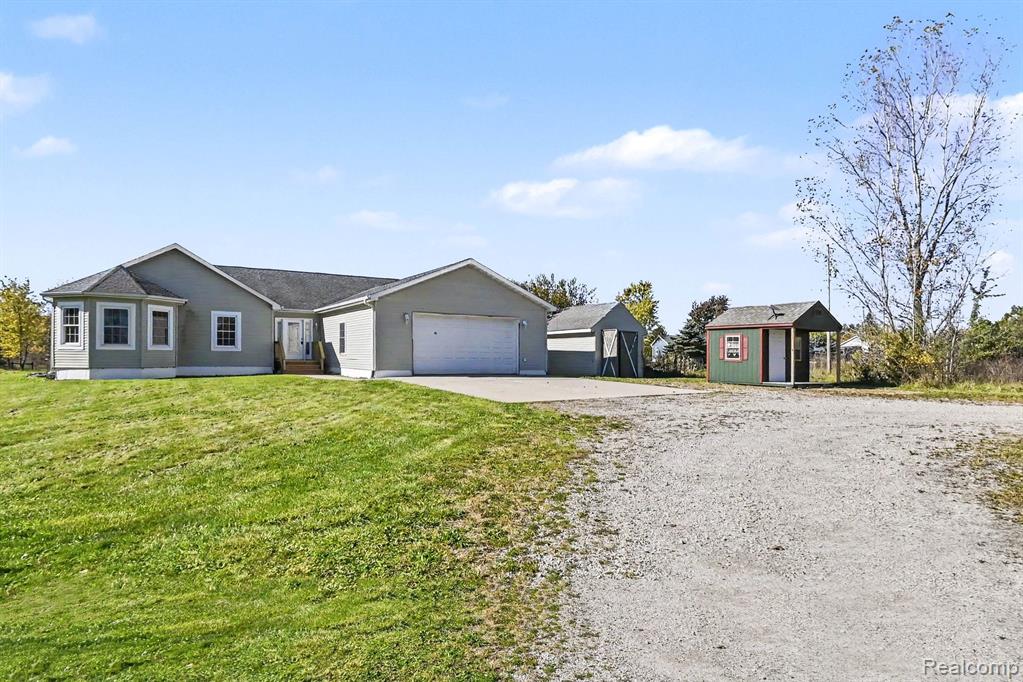
Browse Active DeWitt Listings
Open House
$264,900
 Open House
$124,900
 New Listing
Open House
$225,000
 New Listing
$170,000
New Listing
$250,000


Filtered ZIPs: 48820 · · · · · · 49525
About DeWitt, Michigan
DeWitt is a Clinton County city of 4,776 residents at the 2020 census, located north of Interstate 69 and west of U.S. Highway 127 just north of Lansing. The total area covers 2.99 square miles, of which 2.86 is land and the remaining acreage is water tied to the Looking Glass River corridor. The community functions as a bedroom community to Michigan’s capital region, with a median resident age of 40 and a household mix dominated by married-couple families and school-age children.
The community was named after DeWitt Clinton, Governor of New York during the 1820s, and was first settled in 1833 by Captain David Scott, who moved from Ann Arbor and platted the land. The State Legislature formally created DeWitt Township on March 23, 1836, with the first township meeting held at Captain Scott’s house on April 8 of that year. Welcome J. Partelo was named the first Supervisor at that meeting.
The original township once encompassed the entire county. Between 1837 and 1841 it was carved up into Watertown, Bingham, Ossowa (later renamed Bath in 1857), and Olive Townships, leaving the modern boundary. Clinton County’s seat sat in DeWitt Township from the county’s inception until December 1857, when it was moved to St. Johns.
In the early 1900s the Lansing, St. Johns and St. Louis Railway opened the community to a new era of prosperity. Village incorporation followed in 1929. On October 21, 1930, a fire swept through the downtown business district, destroying eight historic and commercial buildings including the regionally famous Clinton House/Hotel. Residential development continued through the fire’s aftermath, accelerating the shift toward the modern bedroom-community pattern.
The local economy is anchored by proximity to Lansing — Michigan’s state capital — about 10 miles south, where state-government agencies, Michigan State University in East Lansing, and major employers in the legal, insurance, and healthcare sectors drive the regional employment base. Within the city, DeWitt Public Schools is a meaningful employer alongside a small retail and professional-services footprint. Healthcare paychecks come largely from the Lansing hospitals — University of Michigan Health-Sparrow and McLaren Greater Lansing — both within roughly 12 to 15 minutes.
Neighborhood Guide · DeWitt, MI
DeWitt Neighborhoods
Residential blocks here cluster along the Looking Glass River, around the older village core, and along the southern approach to Lansing. The U.S. Highway 127 and Interstate 69 corridors define the eastern and southern edges, with newer subdivision growth feeding into the DeWitt Public Schools attendance area. Inventory mixes pre-war village homes, mid-century single-family stock, and newer subdivision construction.
DeWitt City Core
The original village core, platted in the 1830s after Captain David Scott arrived from Ann Arbor and laid out the land in 1833. The blocks immediately around the historic Main Street commercial strip carry the oldest housing inventory in the city, mixing late-19th-century and early-20th-century homes with infill from the railroad-era expansion that followed the early-1900s arrival of the Lansing, St. Johns and St. Louis Railway. Lots are typically compact, sidewalks run through the older grid, and the small downtown business district sits within an easy walk.
Walkability: Walkable village grid with sidewalks throughout the historic core; small downtown amenities reachable on foot.
Buyer fit: Common among buyers prioritizing small-city character, walkability to a downtown core, and older architectural detail — particularly first-time buyers stepping into the Lansing metro, downsizers leaving larger suburban parcels, and remote-work professionals.
Looking Glass River Corridor
Homes positioned along the Looking Glass River, a tributary of the Grand River that defines the city’s natural water frontage. Inventory ranges from older village-era cottages on smaller riverfront lots to newer single-family homes on larger riparian parcels set back from the floodplain. The river corridor anchors the community’s water character, with mature tree canopy along the banks. Buyers should plan for property-specific flood-insurance review on any parcel touching the floodplain.
Walkability: Mostly drive-oriented; river-corridor lots prioritize private water frontage over walk-to-amenities access.
Buyer fit: Common among buyers prioritizing water frontage, kayak and canoe access, and a quieter residential setting within a short drive of Lansing employment. Particularly suited to move-up buyers, semi-retirees, and dual-income households wanting the recreational value of riverfront without the price tag of a major-lake property.
DeWitt Public Schools Area
Residential blocks feeding into DeWitt Public Schools, the district that operates six facilities spanning pre-K through high school within the immediate community. Inventory leans toward mid-century single-family homes and 1980s-through-2000s subdivision construction, with traditional three-and-four-bedroom floor plans, attached garages, and back-yard depth aimed at family use. Sidewalks run through most of the newer subdivisions.
Walkability: Sidewalks throughout most subdivisions; school campuses reachable on foot from many residential blocks.
Buyer fit: Common among families with school-age children, dual-career households prioritizing district stability, and move-up buyers trading a smaller starter home for a larger family-stage property within the same district. The under-18 share of the city population — 24.8% — reinforces the family-housing demand pattern.
US-127 / I-69 Corridor
Residential parcels near the U.S. Highway 127 and Interstate 69 corridors that frame the eastern and southern edges of the city. The freeway interchanges in this part of the metro give residents one of the strongest commuter-access positions in Clinton County — U.S. 127 runs north-south toward St. Johns, while I-69 runs east-west connecting Lansing and Flint. Inventory mixes newer subdivision homes from the 1990s-through-2010s with infill single-family construction.
Walkability: Drive-oriented; freeway access is the defining feature rather than pedestrian connectivity.
Buyer fit: Common among Lansing-metro commuters, dual-commute households where one partner heads east toward Flint or west toward Grand Ledge, and buyers who want fast freeway access for regional travel without paying Lansing or East Lansing prices.
Lansing Approach (Southern DeWitt)
Residential parcels in the southern portion of the city — the blocks closest to the Lansing city line, roughly a 12-minute drive to downtown Lansing. Inventory is dominated by post-war and mid-century single-family homes on suburban-scale lots, with sidewalks running through most of the developed blocks. The southern approach captures the strongest commuter convenience for residents heading into state-government, MSU, or Sparrow / McLaren healthcare employment.
Walkability: Suburban sidewalk network; predominantly drive-oriented for daily commute and errands.
Buyer fit: Common among Lansing-bound commuters wanting the shortest practical drive into the capital, first-time buyers stepping out of Lansing rentals into ownership, and dual-income households where minutes saved each morning matter to the family routine.
Greater DeWitt Residential
The broader stock of single-family residential blocks across the city — everyday inventory outside the village core, river corridor, and freeway edges. This includes the 1960s-and-newer subdivisions that filled in as the city grew into its 2.99-square-mile modern footprint. Floor plans run the full traditional range — ranch, split-level, two-story colonial, and open-plan.
Walkability: Sidewalks throughout most blocks; neighborhood-scale amenities reachable on foot.
Buyer fit: Common among year-round households building primary-residence equity, families upgrading from a starter into a larger property without changing districts, and buyers prioritizing resale liquidity of a well-established residential block.
Property Types in DeWitt
Single-Family Homes
The dominant inventory category — traditional detached homes across the village core, mid-century blocks, and newer subdivisions feeding the local district. Floor plans run from older two-and-three-bedroom village houses through 1960s-to-2000s ranches and colonials to newer four-bedroom subdivision construction. Most active listings fall in the $320K-$540K band, with selectively larger properties pushing toward the upper end.
Condos & Townhouses
A moderate condo and townhouse inventory serves first-time buyers, downsizers, and households wanting lower-maintenance ownership without leaving the immediate community. Stock includes attached-row townhouses, ranch-style detached condos in association communities, and some smaller multi-unit developments. Association fees and reserve-fund health vary widely — both worth reviewing before the inspection deadline.
New Construction
A moderate new-construction market continues to add inventory in newer subdivisions on the city’s developing edges. Builders typically offer three-and-four-bedroom plans with attached two-and-three-car garages, modern open-plan layouts, and energy-efficient mechanical systems. New-build buyers should expect a longer timeline from contract to closing and should plan the financing terms with that delay in mind.
Investment Properties
The local rental market is anchored by Lansing-area commuter workforce demand — state-government staff, MSU employees, hospital workers, and renters who want a smaller-city base within an easy drive of capital employment. Single-family rentals dominate, with a smaller pool of duplex and small-multi inventory. Cap rates run tighter than further-out rural markets but vacancy risk is lower.
Waterfront Homes
The Looking Glass River corridor defines the local waterfront category. Inventory ranges from older village-era cottages on smaller riverfront lots to larger riparian parcels with deeper setbacks. Buyers should plan for property-specific flood-zone review, FEMA map confirmation, and a flood-insurance quote before the inspection deadline — all standard steps in a riverfront purchase.
Luxury Homes
The higher-end inventory concentrates on larger-parcel properties, custom-built homes in the newer subdivisions, and the most carefully restored historic homes inside the village core. Luxury listings here trade at lower price points than comparable East Lansing or Okemos homes, which makes the area attractive for executive relocation buyers wanting more house and more land for the same budget.
DeWitt Schools & Education
The community is anchored by DeWitt Public Schools, the district operating six facilities that span pre-K through high school within the immediate city footprint. The broader Clinton and Ingham County area adds private and parochial options, and Michigan State University in East Lansing — roughly 15 minutes south — anchors the regional higher-education base.
DeWitt Public Schools
The local public district serves the city and portions of the surrounding township. The district operates six facilities organized by grade band — an early-childhood center plus elementary buildings grouped by grade level, a middle school, and a high school — which keeps each campus’ student population narrower than a typical K-8 elementary model. The district is the primary anchor of the city’s family-housing demand. With 32.7% of local households reporting children under 18, district footprint directly shapes resale demand.
Private & Parochial Options
The broader Clinton and Ingham County area offers a meaningful set of private and parochial K-12 options, most reachable within a 15-to-25-minute drive from the city. Options include parochial elementary and secondary programs along the Lansing-East Lansing corridor as well as independent and faith-based schools in the wider metro. Families weighing parochial enrollment should plan around commute logistics and tuition lock-in dates, both of which Edward folds into buyer-consultation timing for school-driven house searches.
Higher Education — MSU & Lansing Community College
Michigan State University in nearby East Lansing — about 15 minutes south — anchors the regional higher-education base. MSU brings undergraduate, graduate, and research programs across virtually every academic discipline, plus a teaching-hospital footprint through its medical schools. Lansing Community College and other regional postsecondary options add associate-degree, trade-certification, and adult-education programming within the metro. Households relocating with college-age children or adult learners typically find a strong post-secondary mix without leaving the immediate region.
School district boundaries cross municipal lines and assignments shift periodically. Confirm exact district assignment for any specific property with Edward — he verifies district and enrollment options as part of the buyer consultation.
Cost of Living & Property Taxes in DeWitt
One of the biggest advantages of DeWitt Michigan real estate is affordability relative to comparable metro areas. Here’s what it costs to live in DeWitt.
—
Avg. Home Price
$85,000
Median Household Income
—
Property Tax Rate
Property Taxes
DeWitt property taxes are calculated on a home’s taxable value — roughly 50% of market value in Michigan — multiplied by the local total millage rate (city or township + county + school + intermediate school district). Your exact tax depends on the specific property and jurisdiction within the DeWitt area; Edward provides a precise estimate for any home you’re considering.
If the home is your primary residence, file the Michigan Principal Residence Exemption (PRE) — it removes 18 mills (the local school operating millage) from your tax bill. On an average-priced DeWitt home, the PRE saves roughly $1,450 per year, typically 30–40% of total property taxes. The PRE is filed once at closing and stays in effect as long as you live in the home.
Cost Comparison
Michigan offers among the lowest costs of living in the Great Lakes region. Housing, property taxes, and — since the 2020 no-fault auto insurance reform — vehicle insurance all run below national averages, and Michigan has no local income tax in most jurisdictions. For buyers relocating from higher-cost metros, that combination means a given budget reaches noticeably further in DeWitt than in comparable out-of-state markets.
Within DeWitt, the real cost variable is neighborhood and property type rather than the city overall. Edward walks buyers through total monthly cost — mortgage, taxes, insurance, and utilities — for any specific DeWitt home so the comparison is grounded in real numbers, not averages.
DeWitt Market Trends
Understanding market trends helps buyers and sellers make better decisions in the DeWitt Michigan real estate market. Here’s what the data shows.
Key Trends for 2026
Prices rising steadily
DeWitt home values continue to appreciate, outpacing the national average.
Low inventory
Current supply is well below a balanced market (typically 4–6 months), meaning demand significantly exceeds available homes.
Fast-moving market
Well-priced homes in desirable neighborhoods sell in under 2 weeks. Buyers need pre-approval ready.
Spring/summer peak
Historically, DeWitt sees the strongest buyer activity from April through August.
New construction increasing
Developers are adding inventory in suburban areas, but supply still lags demand.
Mortgage Options for DeWitt Homebuyers
This is where Edward Kalavitz gives you an advantage no other DeWitt Realtor can match. As a dual-licensed Realtor AND Mortgage Loan Originator, Edward handles both your home search and your financing — saving you time, money, and the hassle of coordinating between multiple professionals.
FHA Loans
№ 013.5% down with credit scores as low as 580. The most popular choice for DeWitt first-time buyers. Lower down payment and more flexible qualification.
Conventional Loans
№ 023-20% down with credit scores of 620+. Competitive rates and no upfront mortgage insurance with 20% down. Best for buyers with strong credit.
VA Loans
№ 030% down for veterans and active military. No monthly PMI. The best loan program available — if you qualify, Edward will make sure you use it.
USDA Loans
№ 040% down — DeWitt city limits are NOT USDA-eligible. However, nearby communities in Clinton County (Bath, Eagle, Wacousta, Riley, and Pewamo) ARE eligible for zero-down USDA loans. Income limits apply (typically 115% of area median income).
MSHDA Down Payment Assistance
№ 05Up to $10,000 in down payment help from the Michigan State Housing Development Authority. Income limits apply — Edward checks eligibility at your consultation.
Payment Calculator
№ 06See exactly what a DeWitt home costs per month. Try our free mortgage calculator or affordability calculator.
Buying a Home in DeWitt — Step by Step
Whether you’re a first-time buyer or experienced homeowner, here’s how to buy in the DeWitt Michigan real estate market with Edward Kalavitz handling both your Realtor and mortgage needs.
Get Pre-Approved (Free)
Call Edward at (616) 633-3692 or apply online. He’ll compare FHA, VA, USDA, and conventional options simultaneously and issue your pre-approval letter — typically within 24 hours. This tells sellers you’re a serious, qualified buyer.
Search Homes in DeWitt
With pre-approval in hand, Edward helps you search DeWitt neighborhoods that match your budget and lifestyle. As your Realtor, he can schedule showings, provide neighborhood insights, and run live payment scenarios as you tour homes.
Make an Offer & Negotiate
When you find the right home, Edward writes your offer with competitive terms informed by current DeWitt market data. In a fast-moving DeWitt market, having a Realtor who understands both the real estate and financing side gives you a strategic advantage.
Inspection, Appraisal & Closing
Edward manages the entire pipeline — home inspection coordination, appraisal ordering, title work, underwriting, and closing preparation. One point of contact through the entire process.
Welcome Home to DeWitt!
On closing day, you sign final documents and receive your keys. Edward ensures every number is accurate and every fee is verified. You’re now a DeWitt homeowner.
Edward’s Selling Advantage
Selling Your Home in DeWitt
Selling a home in DeWitt in 2026 rewards preparation. Accurate pricing from day one, professional presentation, and strategic timing are what separate listings that attract strong offers from those that linger on the market. Edward’s dual-license perspective — licensed Realtor and Mortgage Loan Originator — means he prices with both sides of the transaction in view, and can pre-qualify incoming buyers to keep your closing on track.
As your listing agent, Edward Kalavitz handles every step of the local selling process — comparative market analysis using current DeWitt comps in your specific neighborhood, professional pricing strategy informed by 25+ years of Michigan real estate experience, MLS listing on the Edward’s statewide MLS network (Water Wonderland Association, Realcomp II Limited, Northern Great Lakes MLS, MiRealSource, MichRIC, and Greater Lansing Association of REALTORS), professional photography and digital marketing, open house scheduling, offer negotiation, and full coordination through inspection, appraisal, and closing.
Most DeWitt sellers find that listing in April through August captures the strongest buyer activity — but well-priced homes sell year-round in this market.
Edward’s dual license as both a Michigan Realtor (#6501386956) and Mortgage Loan Originator (NMLS #138424) gives sellers a meaningful advantage that single-licensed agents simply can’t match.
When offers come in, Edward immediately vets each buyer’s financing strength with a lender’s eye — flagging weak pre-approvals before you accept an offer that might fall through, identifying buyers whose lock periods are about to expire, and reducing the risk of a deal collapsing in underwriting two weeks before close. In a fast market like DeWitt, fewer fall-throughs means faster, more certain closings.
Before you list, run the numbers. Edward’s Seller Net Sheet Calculator shows your estimated proceeds after agent commissions, title fees, transfer taxes, and remaining mortgage payoff — so you know exactly what you’ll walk away with before you sign a listing agreement. For a free home valuation and listing strategy consultation, call Edward at (616) 633-3692.
Edward’s Local Take on DeWitt

Hi, Edward Kalavitz here. Twenty-five years working across this market, and here’s what I’ve learned about DeWitt: it’s a small Clinton County city with an unusually strong commute-and-schools combination, and almost every successful buyer I work with here is solving for one of five priorities. Once we name the priority, the right neighborhoods become obvious. Below are the five buyer profiles I see most often — tell me which one sounds like you and we’ll narrow the search from day one.
Edward Kalavitz
Watch: Meet Edward
Get to know Edward Kalavitz — learn how he helps DeWitt Michigan families buy, sell, and finance homes with dual-licensed real estate and mortgage expertise.
Nearby Cities
Exploring the DeWitt Michigan real estate market but open to nearby communities? These cities are all within a short drive and offer different price points and neighborhood character — explore each one’s listings below.
What Clients Say About Working with Edward
Edward is a dual-licensed Realtor & Mortgage Loan Originator. Reviews include clients from both his real estate and mortgage practices.
“Very Professional and Thorough”
“Edward is very professional and thorough. Had a great experience working with him. Everything went very smooth.”
“Great to Have 2 in 1”
“Ed was very responsive, knowledgeable, and made our first home buying experience great! He’s a relator and lender, which was great to have “2 in1”. We were able to look at houses and run number the same day. He was very flexible with times we needed to set up showings, as well as very informative and organized with paperwork! I appreciate his expertise greatly!”
“Works Hard 24/7”
“Ed is wonderful to work with! He is very thorough, experienced, and friendly. Ed works hard 24/7 to give you the best mortgage experience and is always able to help with whatever you need!”
“Above and Beyond”
“Edward is a great relator and loan officer. He helped my fiance and I buy our first home. We called him back when we were ready to sell and buy our forever home. He again went above and beyond to make the process swift and easy. I recommend him to my friends and family who are looking into buying, selling or refinacing their home!”
“Closing Came Sooner Than Anticipated”
“Edward was up front, professional and most helpful in first determining if I was a good candidate for a mortgage re-Fi. My case was Probably not the easiest , however, he made my “homework” manageable. The closing came sooner than anticipated , thanks to his perseverance, knowledge and professionalism .”
“Not Only My Realtor — My Friend”
“Edward was an excellent help in the most stressful time of my life. My son passed away in 2018 and I had to sell his home. Edward alleviated some stress by being patient, organized and communicated thoroughly the entire process. He not only was my realtor/loan officer but he was my friend! Highly recommend him for any home needs!”
Recently Sold Homes in DeWitt


DeWitt Commute & Transportation
Two major freeways frame the city — Interstate 69 to the south and U.S. Highway 127 to the east — giving residents one of the stronger commuter-access positions in Clinton County. Lansing sits roughly 10 miles south for state-government and MSU-area work, and Capital Region International Airport handles regional commercial flights.
US-127
U.S. Highway 127 runs north-south along the eastern edge of the city, connecting Lansing southward and St. Johns, Ithaca, and the Mount Pleasant corridor northward. For residents commuting to state-government, MSU, or Lansing-area healthcare employment, U.S. 127 is the default route into the metro. The highway also provides the practical link to Central Michigan University in Mount Pleasant, about 45 minutes north.
I-69
Interstate 69 runs east-west south of the city, connecting Lansing with Flint to the east and the Indiana state line via Coldwater to the west. For residents whose work, family, or seasonal travel pulls them outside the immediate metro, I-69 is the cross-state spine. The interchange access from the southern approach blocks supports dual-direction commuter households without requiring a full Lansing detour.
Lansing Metro Access
The roughly 12-minute drive into Lansing — Michigan’s state capital — is the defining commute pattern for most local working households. State-government agencies, Michigan State University employment in East Lansing 15 minutes south, and the two major Lansing hospitals together account for the bulk of the daily commuter flow. The compact drive time is one of the strongest selling points for relocating buyers.
Regional Air Access
Capital Region International Airport, roughly 18 minutes south, provides commercial passenger service to several hub markets with daily connections. For longer-haul travel or international itineraries, Gerald R. Ford International Airport in Grand Rapids and Detroit Metro Airport are both within a 70-to-90-minute drive — workable for once-or-twice-monthly business travel without a same-day return requirement.
Where DeWitt Sits on the Map
Approximate drive times to other markets buyers commonly compare to DeWitt. Times reflect typical non-rush conditions; commute hours add 15–30%.
DeWitt Lifestyle, Entertainment & Recreation
The local lifestyle blends 1833-settled heritage, Looking Glass River recreation, year-round school-and-community programming through DeWitt Public Schools, and the bedroom-community rhythm of a small city sitting at the doorstep of Michigan’s capital. Households here generally trade big-box density for a more compact downtown and access to outdoor recreation along the river corridor.
1833-Settled Heritage
The community traces its origin to 1833 — when Captain David Scott arrived from Ann Arbor and platted the original village — and to the 1836 township formation that briefly made it the seat of Clinton County. The 1930 downtown fire reshaped the commercial district but the historic residential blocks retain a meaningful share of pre-1930 housing stock. For residents who value historical continuity over new-build polish, that lineage is part of the daily-life appeal.
Looking Glass River
The Looking Glass River — a tributary of the Grand River — runs through the area and provides the city’s primary water-recreation feature. The river supports paddling, fishing, and informal riverside walking from multiple access points, and accounts for the 0.13 square miles of water within the 2.99-square-mile municipal footprint. The corridor sets a quieter, treed character for the residential blocks that line it.
DeWitt Public Schools Identity
The six-facility public-school district drives much of the year-round community rhythm — Friday-night high-school athletics, district arts programming, youth-sports leagues organized through the elementary buildings, and the parent-network social fabric that builds up around a single anchor district. For family households relocating, that identity is often the single biggest lifestyle factor in the buying decision.
State-Capital Bedroom Community
The community has evolved — per the city’s own historical record — into a bedroom community to Michigan’s capital region. The lifestyle pattern is small-city living combined with metro-tier access to government, university, healthcare, and cultural amenities in Lansing and East Lansing. Households get the trade-off most often described in the early-1900s railroad era: residential calm with metro-employment reach.
DeWitt Healthcare & Medical Facilities
Healthcare access is anchored by the Lansing medical sector — both University of Michigan Health-Sparrow and McLaren Greater Lansing sit within roughly a 12-to-15-minute drive south. Outpatient clinics, urgent care, and primary-care practices serve everyday needs, and tertiary referral capacity is available through the broader academic systems further afield.
UM Health-Sparrow — Lansing
University of Michigan Health-Sparrow in Lansing is the regional academic medical center for the capital area, sitting roughly 12 minutes south. The hospital provides comprehensive inpatient and outpatient services including emergency medicine, surgery, cardiology, obstetrics, oncology, and pediatric care. Its academic affiliation broadens specialist access and supports clinical-trial enrollment for residents who need it. For households relocating, the proximity of a major academic-system hospital removes one of the most common transition concerns.
McLaren Greater Lansing
McLaren Greater Lansing provides a second full-service hospital option in the metro, offering emergency, surgical, maternity, cardiac, and orthopedic care alongside an outpatient clinical network. The two-hospital structure in Lansing gives residents in-network flexibility across the major Michigan commercial-insurance plans, which matters for households shifting between employer-sponsored coverage at relocation.
Local Outpatient & Primary Care
The city is served by a network of outpatient clinics, urgent-care storefronts, and primary-care practices that handle day-to-day medical needs without requiring a Lansing trip. Pediatric, family-medicine, and internal-medicine providers operate from the immediate community and the surrounding Clinton County corridor. For most non-emergency care, residents can keep appointments inside a 10-minute drive.
Tertiary Referral — Major Academic Systems
When a condition requires tertiary-or-quaternary care beyond the regional hospitals, the broader Michigan academic system — including the University of Michigan in Ann Arbor and downstate academic centers — is within practical drive distance. Ann Arbor sits roughly 75 minutes southeast for residents who need transplant medicine, complex pediatric surgery, or specialized oncology programs unavailable closer to home.
New Listings This Week in DeWitt
Open House
$264,900
Open House
$124,900
New Listing
Open House
$225,000
New Listing
$170,000
DeWitt Real Estate FAQ
QWhat is the average home price in DeWitt, Michigan?
DeWitt home pricing varies substantially by area — based on current MLS market activity, broader residential blocks run $320K-$540K. (Note: the city’s data in the live municipal-statistics dashboard is being re-verified — Edward provides a precise, current market read for any specific DeWitt property or street.)
QWhat school district is DeWitt, Michigan in?
DeWitt is served by DeWitt Public Schools — six facilities spanning from pre-K through high school. District assignment is property-specific.
QIs DeWitt, Michigan eligible for USDA loans?
DeWitt is generally not USDA-eligible as a Lansing-metro city. Eligible nearby communities include Bath, Eagle, Wacousta, Riley, and Pewamo. Eligibility is property-specific.
QHow long do homes typically stay on the market in DeWitt?
Well-priced DeWitt homes in active neighborhoods can sell in two to four weeks; mispriced inventory sits much longer. The key is accurate pricing from day one — Edward’s 25+ years across Michigan markets prevents the price-cut cycle that costs sellers thousands in final net.
QShould I use a Realtor or sell my home myself (FSBO)?
For most DeWitt sellers, working with a licensed Realtor produces a higher final net after accounting for commission. National Association of Realtors data consistently shows FSBO transactions close at lower prices with more contingency complications. Edward’s dual-license advantage means he can pre-approve qualified buyers directly — which speeds closings, reduces fall-through risk, and gives you better negotiating leverage.
QWhat’s the financing process for buying a home in DeWitt?
Step 1 — Get pre-approved (Edward can pre-approve you directly as a licensed Mortgage Loan Originator, NMLS #138424). Step 2 — Shop within your approved price range. Step 3 — Submit an offer with pre-approval letter attached. Step 4 — Home inspection plus appraisal. Step 5 — Loan underwriting and conditions. Step 6 — Closing. Edward handles both Realtor and Mortgage sides for DeWitt buyers — eliminating the coordination friction that delays most transactions.
QWhy choose Edward Kalavitz for DeWitt real estate?
Edward is dual-licensed as both a Michigan Realtor (#6501386956) and Mortgage Loan Originator (NMLS #138424). One expert handles your pre-approval, home search, offer, AND financing — eliminating the back-and-forth that delays most transactions. 25+ years of experience across Michigan’s six MLS networks (Water Wonderland Association, Realcomp II Limited, Northern Great Lakes MLS, MiRealSource, MichRIC, and Greater Lansing Association of REALTORS) gives statewide listing reach unmatched by single-MLS competitors.
Buy or Sell in DeWitt with Edward Kalavitz
Dual-licensed Realtor & Mortgage Loan Originator — one trusted professional for your entire transaction.
Available When You Need Answers
Real estate questions don’t wait for business hours — and neither does Edward Kalavitz.

