
Homes for Sale in Decatur, Michigan
Search all available listings, view market trends, and get expert guidance from Edward Kalavitz — your dual-licensed Decatur Realtor and Mortgage Loan Originator with 25+ years of experience.
Realtor License #6501386956 · Turnkey Realty LLC • NMLS #138424 · Private Mortgage Guarantee LLC
In This Guide
- Market Dashboard
- Today’s Rates in Decatur
- Michigan Mortgage Advisor
- Homes for Sale in Decatur
- About Decatur
- Neighborhoods & Subdivisions
- Property Types
- Schools & Education
- Cost of Living & Taxes
- Market Trends
- Mortgage Options in Decatur
- Buying in Decatur
- Selling in Decatur
- Edward’s Local Take
- Watch: Meet Edward
- Nearby Cities
- Google Reviews
- Decatur FAQ
- Available Hours
Decatur Real Estate Market Dashboard
Mortgage Rates in Decatur
Competitive pricing personalized to your scenario. Rates shown reflect 740+ credit, 30-year fixed terms unless noted.
Purchase Loans
Conventional Purchase
15-Year Conventional
FHA 30-Year Purchase
VA 30-Year Purchase
USDA Purchase & Refinance
USDA 30-Year Purchase
FHA Streamline Refi
Conventional Refinance
Jumbo & High-Balance
Jumbo / High-Balance
Not Sure Which Loan You Qualify For?
See the rates. Not sure which loan fits your situation? The Michigan Mortgage Advisor answers that in 60 seconds — analyzing your credit, down payment, and goals to recommend the best loan program and show you your real monthly payment on Decatur Michigan real estate.
- Instant loan-type recommendation — FHA, VA, USDA, or Conventional
- Live rate and APR for your exact scenario
- Michigan-specific closing cost estimate
- No credit check required to start
Best loan for you: FHA
3.5% down
~$1,830/mo principal + interest
Your actual recommendation is calculated live based on your inputs.
Featured Decatur Listings
Premium properties in the Decatur area, $500K and above.


Browse Active Decatur Listings
 New Listing
$174,900


Filtered ZIPs: 49045 · · · · · · 49525
About Decatur, Michigan
Decatur is a small village in Van Buren County, in southwest Michigan, with a 2020-census population of 1,651 residents across 683 households. The village covers 1.43 square miles total — 1.35 square miles of land plus a small 0.08-square-mile share of water — and sits inside the larger Decatur Township. The community draws its identity from a 19th-century namesake and from a long agricultural-and-school-centered Van Buren County tradition, supported today by close ties to the Kalamazoo metro roughly thirty minutes east.
The village traces its origins to the mid-19th century, when Decatur Township and the surrounding Van Buren County farmland were settled and platted. The community was named for a U.S. Navy officer whose national fame predated the village’s founding by a generation. Like many Van Buren County villages, the local street grid grew around a central core that served the surrounding agricultural townships, with churches and a public school district anchoring civic life early on.
The local economy reflects a mix typical of small Van Buren County villages: agriculture and agriculture-adjacent businesses across the surrounding township, public-sector employment tied to Decatur Public Schools and local government, and a meaningful share of residents who commute to the Kalamazoo metro for healthcare, education, and manufacturing roles.
Census data shows 33.5% of households are married couples and 31.1% are individuals living alone — a household mix consistent with a village that retains both family-stage residents and long-tenured older homeowners. The median age of 38.7 years sits close to the Michigan statewide median, suggesting steady generational turnover rather than a rapidly aging or rapidly growing population.
Neighborhood Guide · Decatur, MI
Decatur Neighborhoods
Housing in this Van Buren County village is organized around the historic village core inside the village limits, the residential blocks feeding the local public school district, and the surrounding Decatur Township parcels that transition into open Van Buren County countryside. With only 1.35 square miles of village land plus the broader township, distinctions between sub-neighborhoods are short walks or short drives rather than long crosstown commutes.
Decatur Village Core
The historic village center inside the 1.35 square miles of incorporated village land. Inventory leans toward late-19th and early-20th-century single-family homes on compact lots — the housing stock typical of a Van Buren County village core that was platted in the mid-1800s and has retained much of its original street grid.
Many homes here are within a short walk of the post office, village hall, and the older churches and storefronts that line the central streets. Lot sizes are smaller than in the surrounding township, and sidewalks run through much of the core, which appeals to buyers wanting walkable everyday errands without leaving the village limits.
Walkability: Walkable village grid with sidewalks through the historic core; village amenities and the central post office are reachable on foot in a five-to-ten-minute walk.
Buyer fit: Common among buyers prioritizing small-village walkability, older architectural character, and proximity to civic amenities — particularly retirees, first-time buyers seeking lower-cost entry into Van Buren County, and remote-work professionals trading metro commute for community continuity.
Decatur Public Schools Area
The residential blocks immediately around the local public schools, where the district operates one elementary school, one middle school, and one high school within a relatively compact footprint. Many homes in this pocket are mid-20th-century single-family residences on regularly shaped lots — three-bedroom layouts, attached or detached garages, and modest yards.
Because the entire village school district is small in geographic terms, families here can usually reach all three school buildings within a short drive, and many students walk to school. This is the pocket where year-round family demand is highest, with school assignments and walk routes shaping which streets see the most buyer activity each spring.
Walkability: Sidewalks through most subdivisions; many homes are within walking distance of at least one school building.
Buyer fit: Common among families prioritizing the local public-school assignment, walkable school routes, and stable mid-century single-family blocks — especially first-move-up families relocating within the school district and out-of-area families anchoring on the school assignment.
Decatur First Reformed Heritage Area
Residential parcels in the older section of the village, organized around long-standing church congregations and the heritage blocks that grew around them. Homes here tend to share the older village core’s architectural character — front porches, deeper lots than newer subdivisions, mature trees, and a recognizable pre-1940 street pattern.
The mix includes restored period homes, mid-century infill on the larger parcels that were subdivided over time, and a smaller share of newer rebuilds on legacy lots. Buyers drawn to this pocket are usually those who want a tangible connection to the village’s 19th-century roots without sacrificing modern systems on the inside of the home.
Walkability: Walkable to the historic heritage blocks and the central village core within roughly a ten-minute walk.
Buyer fit: Common among buyers prioritizing historic architectural character, heritage-area continuity, and proximity to long-standing church and civic institutions — particularly multi-generational Van Buren County families and buyers relocating from larger metros for community feel.
Decatur Township Rural
Residential parcels across the broader Decatur Township that surrounds the village. Here, lot sizes are noticeably larger: one- to ten-acre parcels are common, with mature woodlots, frontage on country roads, and occasional small-water frontage on the township’s lakes and ponds.
Housing stock is more varied than inside the village limits — ranch-style homes from the 1960s-1980s, custom-built homes from the 1990s onward, manufactured homes on owned land, and a smaller share of restored farmhouses. The township is firmly drive-oriented, but residents are typically only a five-to-ten-minute drive from the village core and Decatur Public Schools.
Walkability: Drive-oriented rural roads — typical Van Buren County township pattern with limited sidewalk coverage.
Buyer fit: Common among buyers prioritizing larger lots, hobby-farm potential, and rural Van Buren County character — particularly families wanting acreage, buyers with horses or hobby livestock, and remote workers wanting space between neighbors while keeping village amenities close.
Lawton / Paw Paw Approach
Residential parcels in the northern and eastern reaches of the Decatur area, where the township transitions toward neighboring Lawton (about a 12-minute drive) and Paw Paw (about an 18-minute drive). This is wine-country-adjacent Van Buren County — the same general agricultural belt that supports the Paw Paw and Lawton vineyard and winery cluster.
Lot sizes here range from village-edge half-acres to multi-acre rural residential parcels, and the housing mix is similar to Decatur Township Rural but with slightly stronger appreciation pressure from buyers spilling over from the higher-priced Paw Paw and Mattawan markets to the east.
Walkability: Drive-oriented; close proximity to the Paw Paw / Lawton wine-country corridor by car.
Buyer fit: Common among buyers prioritizing proximity to the wine-country corridor, easier reach to I-94 via Lawton or Paw Paw, and a slightly faster commute to the Kalamazoo metro — particularly Kalamazoo-area workers who want rural lot size without giving up reasonable drive times.
Greater Decatur Residential
The broad stock of single-family residential housing across the village and the surrounding Decatur Township that does not fall neatly into the named pockets above. This catchall covers newer infill subdivisions on the village edges, mid-block residential streets a few blocks off the core, and the more typical township-residential parcels.
Inventory here is the most varied — small starter homes, traditional family homes, larger-lot custom builds, and the occasional condo or townhouse unit. For buyers who care more about price-per-square-foot and condition than specific neighborhood identity, this is where the broadest set of options usually appears in active MLS inventory.
Walkability: Walkable to neighborhood amenities in many pockets; township sections are drive-oriented.
Buyer fit: Common among year-round residents, first-time buyers, and value-focused buyers who care more about home condition, square footage, and price-per-foot than a specific named pocket — particularly buyers prioritizing the broadest selection across the local MLS at a given time.
Property Types in Decatur
Single-Family Homes
Single-family detached housing is the dominant product type across the village and the surrounding Decatur Township. Inventory ranges from late-19th-century homes in the village core, to mid-century ranches in the school-area subdivisions, to newer custom builds on township acreage. Most active listings fall in the $200K-$380K band, with higher-end parcels reaching into the $400K range on larger lots or recently renovated homes.
Condos & Townhouses
Attached condominium and townhouse inventory in the area is limited but does appear periodically on the local MLS — most commonly in small clusters near the village edge or in nearby Van Buren County communities. These units typically appeal to downsizing retirees and to first-time buyers wanting lower outdoor-maintenance burden. Inventory turns over slowly enough that buyers usually need an MLS alert to catch the right unit in time.
New Construction
New construction in the area is modest in volume — typically single custom builds on rural township parcels rather than large subdivision developments. Buyers pursuing new construction here are usually working with a regional builder on a township lot, not buying from a production builder’s spec inventory. Lead time, well-and-septic permitting, and county zoning are the typical gating items I help buyers navigate.
Investment Properties
The local rental market is anchored by Van Buren County workforce housing demand and by Kalamazoo-area commuters who prefer renting in the area’s quieter setting over renting in the city. Most investment-grade inventory is small single-family rentals and the occasional duplex or small multi-unit. I help investor buyers focus on cash-on-cash return realistic to the rural village market rather than chasing metro-style appreciation that this market doesn’t deliver.
Waterfront Homes
Decatur Township and the broader Van Buren County area have a number of small-water parcels — homes on township lakes, ponds, and creek frontage rather than Lake Michigan shoreline directly. True Lake Michigan waterfront in this market means looking northwest toward South Haven (about 35 minutes), where pricing is in a different tier. The local small-water inventory is the sweet spot for buyers wanting daily water access without the South Haven price.
Luxury Homes
Higher-end inventory in the area concentrates on larger-parcel rural residential — custom builds on multi-acre Decatur Township lots, newer high-spec homes on the village edge, and restored historic homes in the core. The local luxury tier sits well below metro-area luxury pricing, which is one of the consistent draws for buyers relocating from Chicago, Grand Rapids, or the Detroit suburbs in search of more square footage and more land for the dollar.
Decatur Schools & Education
Public-school students in the area attend the local public-school district, which operates a small set of buildings serving the village and the surrounding township. The compact district footprint means most homes inside the village are within a short walk or drive of at least one school building. Families wanting private or parochial options or higher-education access typically look toward the broader Van Buren County area and the Kalamazoo metro thirty minutes east.
Decatur Public Schools
The local public-school district anchoring the area, operating one elementary school, one middle school, and one high school. The compact district footprint reflects the village’s small physical size — roughly 1.35 square miles of village land plus the surrounding township — which keeps all three buildings within a short drive of nearly every home inside the district boundary.
Year-round community life in the area is closely tied to the district’s calendar: fall sports, school concerts, parent-teacher events, and graduation all draw strong local attendance. For buyers with school-aged children, the simplicity of a one-elementary, one-middle, one-high model is a meaningful contrast to the multi-building districts in larger metro areas, and most families can walk-survey all three schools in a single morning.
Private & Parochial Options
Van Buren County and adjacent Cass and Kalamazoo counties offer additional private and parochial school options, though most are not within the village limits and generally require a longer commute. Common options for area families include Christian schools and parochial schools in neighboring villages such as Paw Paw, Lawton, Marcellus, and Dowagiac, plus more selective independent and parochial schools in the Kalamazoo metro to the east.
Tuition, transportation, and admissions windows vary significantly across these options, so buyers weighing private or parochial enrollment alongside the local public-school district typically build a short list during the offer-and-financing window rather than after closing — Edward routinely flags this during the buyer consultation.
Higher Education Access
For higher education, residents are within practical commuting reach of Western Michigan University in Kalamazoo (roughly 30 minutes east), Kalamazoo Valley Community College, and the broader southwest Michigan higher-education cluster. South Bend, Indiana — home to the University of Notre Dame and several other institutions — is about 55 minutes south and is a feasible commute for graduate students and part-time learners.
This dual orientation — easy reach to both the Kalamazoo metro and the South Bend metro — is one reason the area attracts buyers who want a rural village lifestyle without giving up access to a four-year university campus, professional schools, or a metropolitan job market.
School district boundaries cross municipal lines and assignments shift periodically. Confirm exact district assignment for any specific property with Edward — he verifies district and enrollment options as part of the buyer consultation.
Cost of Living & Property Taxes in Decatur
One of the biggest advantages of Decatur Michigan real estate is affordability relative to comparable metro areas. Here’s what it costs to live in Decatur.
$219,500
Avg. Home Price
$50,000
Median Household Income
—
Property Tax Rate
Property Taxes
Decatur property taxes are calculated on a home’s taxable value — roughly 50% of market value in Michigan — multiplied by the local total millage rate (city or township + county + school + intermediate school district). Your exact tax depends on the specific property and jurisdiction within the Decatur area; Edward provides a precise estimate for any home you’re considering.
If the home is your primary residence, file the Michigan Principal Residence Exemption (PRE) — it removes 18 mills (the local school operating millage) from your tax bill. On an average-priced Decatur home, the PRE saves roughly $990 per year, typically 30–40% of total property taxes. The PRE is filed once at closing and stays in effect as long as you live in the home.
Cost Comparison
Michigan offers among the lowest costs of living in the Great Lakes region. Housing, property taxes, and — since the 2020 no-fault auto insurance reform — vehicle insurance all run below national averages, and Michigan has no local income tax in most jurisdictions. For buyers relocating from higher-cost metros, that combination means a given budget reaches noticeably further in Decatur than in comparable out-of-state markets.
Within Decatur, the real cost variable is neighborhood and property type rather than the city overall. Edward walks buyers through total monthly cost — mortgage, taxes, insurance, and utilities — for any specific Decatur home so the comparison is grounded in real numbers, not averages.
Decatur Market Trends
Understanding market trends helps buyers and sellers make better decisions in the Decatur Michigan real estate market. Here’s what the data shows.
Key Trends for 2026
Prices rising steadily
Decatur home values continue to appreciate, outpacing the national average.
Low inventory
Current supply is well below a balanced market (typically 4–6 months), meaning demand significantly exceeds available homes.
Fast-moving market
Well-priced homes in desirable neighborhoods sell in under 2 weeks. Buyers need pre-approval ready.
Spring/summer peak
Historically, Decatur sees the strongest buyer activity from April through August.
New construction increasing
Developers are adding inventory in suburban areas, but supply still lags demand.
Mortgage Options for Decatur Homebuyers
This is where Edward Kalavitz gives you an advantage no other Decatur Realtor can match. As a dual-licensed Realtor AND Mortgage Loan Originator, Edward handles both your home search and your financing — saving you time, money, and the hassle of coordinating between multiple professionals.
FHA Loans
№ 013.5% down with credit scores as low as 580. The most popular choice for Decatur first-time buyers. Lower down payment and more flexible qualification.
Conventional Loans
№ 023-20% down with credit scores of 620+. Competitive rates and no upfront mortgage insurance with 20% down. Best for buyers with strong credit.
VA Loans
№ 030% down for veterans and active military. No monthly PMI. The best loan program available — if you qualify, Edward will make sure you use it.
USDA Loans
№ 040% down — Decatur city limits ARE USDA-eligible for zero-down loans. However, nearby communities in Van Buren County (Lawton, Marcellus, Mattawan, Cassopolis, and Bloomingdale) ARE eligible for zero-down USDA loans. Income limits apply (typically 115% of area median income).
MSHDA Down Payment Assistance
№ 05Up to $10,000 in down payment help from the Michigan State Housing Development Authority. Income limits apply — Edward checks eligibility at your consultation.
Payment Calculator
№ 06See exactly what a Decatur home costs per month. Try our free mortgage calculator or affordability calculator.
Buying a Home in Decatur — Step by Step
Whether you’re a first-time buyer or experienced homeowner, here’s how to buy in the Decatur Michigan real estate market with Edward Kalavitz handling both your Realtor and mortgage needs.
Get Pre-Approved (Free)
Call Edward at (616) 633-3692 or apply online. He’ll compare FHA, VA, USDA, and conventional options simultaneously and issue your pre-approval letter — typically within 24 hours. This tells sellers you’re a serious, qualified buyer.
Search Homes in Decatur
With pre-approval in hand, Edward helps you search Decatur neighborhoods that match your budget and lifestyle. As your Realtor, he can schedule showings, provide neighborhood insights, and run live payment scenarios as you tour homes.
Make an Offer & Negotiate
When you find the right home, Edward writes your offer with competitive terms informed by current Decatur market data. In a fast-moving Decatur market, having a Realtor who understands both the real estate and financing side gives you a strategic advantage.
Inspection, Appraisal & Closing
Edward manages the entire pipeline — home inspection coordination, appraisal ordering, title work, underwriting, and closing preparation. One point of contact through the entire process.
Welcome Home to Decatur!
On closing day, you sign final documents and receive your keys. Edward ensures every number is accurate and every fee is verified. You’re now a Decatur homeowner.
Edward’s Selling Advantage
Selling Your Home in Decatur
Selling a home in Decatur in 2026 rewards preparation. Accurate pricing from day one, professional presentation, and strategic timing are what separate listings that attract strong offers from those that linger on the market. Edward’s dual-license perspective — licensed Realtor and Mortgage Loan Originator — means he prices with both sides of the transaction in view, and can pre-qualify incoming buyers to keep your closing on track.
As your listing agent, Edward Kalavitz handles every step of the local selling process — comparative market analysis using current Decatur comps in your specific neighborhood, professional pricing strategy informed by 25+ years of Michigan real estate experience, MLS listing on the Edward’s statewide MLS network (Water Wonderland Association, Realcomp II Limited, Northern Great Lakes MLS, MiRealSource, MichRIC, and Greater Lansing Association of REALTORS), professional photography and digital marketing, open house scheduling, offer negotiation, and full coordination through inspection, appraisal, and closing.
Most Decatur sellers find that listing in April through August captures the strongest buyer activity — but well-priced homes sell year-round in this market.
Edward’s dual license as both a Michigan Realtor (#6501386956) and Mortgage Loan Originator (NMLS #138424) gives sellers a meaningful advantage that single-licensed agents simply can’t match.
When offers come in, Edward immediately vets each buyer’s financing strength with a lender’s eye — flagging weak pre-approvals before you accept an offer that might fall through, identifying buyers whose lock periods are about to expire, and reducing the risk of a deal collapsing in underwriting two weeks before close. In a fast market like Decatur, fewer fall-throughs means faster, more certain closings.
Before you list, run the numbers. Edward’s Seller Net Sheet Calculator shows your estimated proceeds after agent commissions, title fees, transfer taxes, and remaining mortgage payoff — so you know exactly what you’ll walk away with before you sign a listing agreement. For a free home valuation and listing strategy consultation, call Edward at (616) 633-3692.
Edward’s Local Take on Decatur

Twenty-five years working across Michigan markets, I’ve helped buyers approach small Van Buren County villages many times, and the pattern here is clear. The area gives you a genuine village lifestyle — walkable core, one compact public-school district, recognizable neighbors — without isolating you from a real metro job market. Kalamazoo is thirty minutes east. South Bend is under an hour south.
Here’s how I help buyers think through the area by priority. I’ll match what matters most to you to the right pocket, then we’ll structure the financing — I’m dual-licensed, so the Realtor side and the mortgage side don’t get lost in handoffs.
Edward Kalavitz
Watch: Meet Edward
Get to know Edward Kalavitz — learn how he helps Decatur Michigan families buy, sell, and finance homes with dual-licensed real estate and mortgage expertise.
Nearby Cities
Exploring the Decatur Michigan real estate market but open to nearby communities? These cities are all within a short drive and offer different price points and neighborhood character — explore each one’s listings below.
What Clients Say About Working with Edward
Edward is a dual-licensed Realtor & Mortgage Loan Originator. Reviews include clients from both his real estate and mortgage practices.
“Very Professional and Thorough”
“Edward is very professional and thorough. Had a great experience working with him. Everything went very smooth.”
“Great to Have 2 in 1”
“Ed was very responsive, knowledgeable, and made our first home buying experience great! He’s a relator and lender, which was great to have “2 in1”. We were able to look at houses and run number the same day. He was very flexible with times we needed to set up showings, as well as very informative and organized with paperwork! I appreciate his expertise greatly!”
“Works Hard 24/7”
“Ed is wonderful to work with! He is very thorough, experienced, and friendly. Ed works hard 24/7 to give you the best mortgage experience and is always able to help with whatever you need!”
“Above and Beyond”
“Edward is a great relator and loan officer. He helped my fiance and I buy our first home. We called him back when we were ready to sell and buy our forever home. He again went above and beyond to make the process swift and easy. I recommend him to my friends and family who are looking into buying, selling or refinacing their home!”
“Closing Came Sooner Than Anticipated”
“Edward was up front, professional and most helpful in first determining if I was a good candidate for a mortgage re-Fi. My case was Probably not the easiest , however, he made my “homework” manageable. The closing came sooner than anticipated , thanks to his perseverance, knowledge and professionalism .”
“Not Only My Realtor — My Friend”
“Edward was an excellent help in the most stressful time of my life. My son passed away in 2018 and I had to sell his home. Edward alleviated some stress by being patient, organized and communicated thoroughly the entire process. He not only was my realtor/loan officer but he was my friend! Highly recommend him for any home needs!”
Recently Sold Homes in Decatur
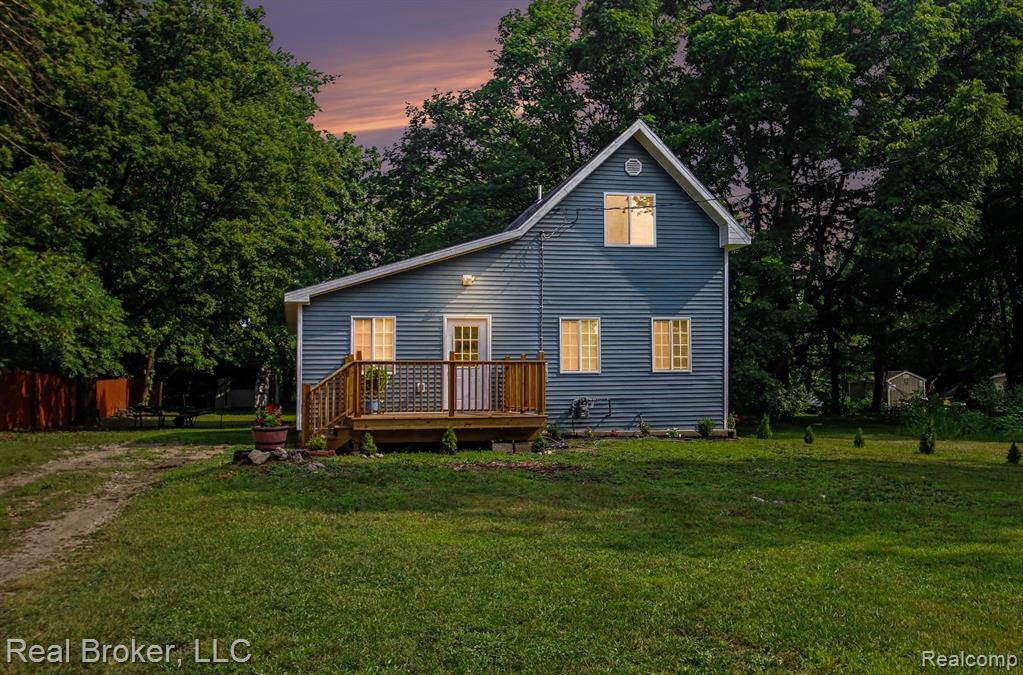


Decatur Commute & Transportation
The area sits in southwest Van Buren County, with the Kalamazoo metro roughly thirty minutes east and the South Bend, Indiana metro about fifty-five minutes south. Most commuters use the I-94 corridor a short drive to the north, reached most easily via Lawton or Paw Paw. Day-to-day driving is dominated by Van Buren County roads connecting the village to its neighboring communities.
Local Network
Van Buren County and Decatur Township roads carry most local trips — to school, to the grocery store, to neighbors, and to the central village. The road network is the standard southwest Michigan grid of paved county routes plus gravel township roads in the more rural sections. Snow and ice management in winter is the typical rural Michigan rhythm — primary roads first, township gravel roads after.
I-94 Access
Interstate 94 is roughly 15 minutes north of the village, reached most directly through Lawton or Paw Paw. I-94 is the main east-west corridor across southern Michigan — Chicago to Detroit — and gives area residents practical reach to Kalamazoo (about 30 minutes east), Battle Creek and Jackson further east, and Benton Harbor and St. Joseph to the west. For most professional commutes out of Van Buren County, I-94 is the key on-ramp.
Kalamazoo Metro Access
The thirty-minute reach to Kalamazoo is the defining commute pattern for the area. Many residents work in Kalamazoo-area healthcare, education, manufacturing, and professional services, then return home each evening. Western Michigan University, Bronson and Ascension Borgess hospitals, and the broader Kalamazoo employment base are all within a single-stage commute, which is the practical reason many buyers accept the village’s small physical footprint.
Regional Air Access
Commercial air service for area residents is handled most commonly through Kalamazoo/Battle Creek International Airport — about thirty minutes east and the closest commercial airport with daily service to major hubs. For wider connections, South Bend International Airport (about 55 minutes south in Indiana) and Gerald R. Ford International Airport in Grand Rapids (about 90 minutes north) are within practical reach for the occasional long-haul trip.
Where Decatur Sits on the Map
Approximate drive times to other markets buyers commonly compare to Decatur. Times reflect typical non-rush conditions; commute hours add 15–30%.
Decatur Lifestyle, Entertainment & Recreation
Day-to-day life in the area is built on the rhythm of a small Van Buren County village — public-school events, church-and-civic life in the older village core, outdoor and agricultural activity across the surrounding township, and easy weekend reach to the Lake Michigan shoreline through South Haven. The four facets below reflect the most common lifestyle anchors that buyers cite when explaining why they’re searching here.
Historic Village Heritage
The village’s 19th-century origins as a small Van Buren County agricultural community shape much of the area’s lifestyle character — the compact street grid, the older homes around the core, the recognizable civic institutions on Main Street, and the long-standing churches that still anchor weekly community life. Residents who prioritize a tangible sense of place — knowing your neighbors, recognizable storefronts, and predictable annual community events — often cite this heritage as the reason they searched in the area first.
Historical Identity
The community’s historical identity — including a 19th-century naming connection to a U.S. Navy officer of national fame — gives the village a recognizable place in southwest Michigan’s local history. That identity surfaces in school traditions, civic events, and the way long-tenured residents describe the community to newcomers. For buyers relocating from outside the area, this rooted sense of place is one of the more frequently cited contrasts to newer subdivision communities elsewhere in the state.
Decatur Public Schools Community
The local public-school district functions as much more than a building footprint — it’s the year-round social calendar for many families. Friday-night sports, school concerts, district-wide fundraisers, and graduation events draw strong cross-generational attendance. For families with school-aged children, this community-and-school rhythm is the practical center of weekday and weekend activity, and is one of the strongest predictors of buyer satisfaction in the area.
Van Buren County Rural Character
The 2020 census classifies the population as fully rural, which matches the lived experience of the area — open county roads, mature woodlots, hobby farms, small lakes and ponds across the township, and easy weekend reach to the Lake Michigan shoreline through South Haven (about 35 minutes northwest). Outdoor activity — hiking, hunting, fishing, gardening, agritourism — is built into the typical week here, not reserved for vacations.
Decatur Healthcare & Medical Facilities
Day-to-day healthcare for the area runs through a mix of local outpatient and primary-care offices plus the larger Kalamazoo metro hospital systems thirty minutes east. The two flagship academic medical centers in Kalamazoo handle most inpatient and specialty care for Van Buren County residents, while Corewell Health and other major Michigan systems handle the more complex tertiary-and-quaternary referrals.
Bronson Methodist Hospital — Kalamazoo
Bronson Methodist Hospital in Kalamazoo is one of southwest Michigan’s flagship academic medical centers and the closest large-hospital option for the area, about 30 minutes east. Bronson handles a full range of inpatient care, emergency services, specialty programs, and surgical procedures, and is the default destination for serious medical needs that exceed local outpatient capacity in Van Buren County.
Ascension Borgess Hospital — Kalamazoo
Ascension Borgess Hospital in Kalamazoo provides additional full-service hospital care for residents in the area, including emergency services, surgical care, cardiology, oncology, and a broad range of inpatient specialties. The two-hospital Kalamazoo market — Bronson and Borgess — gives Van Buren County residents meaningful choice in primary inpatient destination, which is uncommon for a rural Michigan village this size.
Local Outpatient & Primary Care
Day-to-day healthcare in the area is delivered through a network of local outpatient clinics, urgent-care offices, dental practices, and primary-care offices serving the village and surrounding Decatur Township. For most non-emergency needs — annual physicals, routine labs, minor injuries, pediatric visits — residents do not need to drive to Kalamazoo. Pharmacy access is similarly handled within the village and the immediately neighboring communities.
Tertiary Referral — Major Academic Systems
For complex tertiary and quaternary care, area residents are referred onward to large academic medical centers — most commonly Bronson Methodist Hospital in Kalamazoo, Corewell Health hospitals in Grand Rapids (about 90 minutes north), and University of Michigan Health in Ann Arbor (about two hours east). This referral network covers transplant medicine, advanced oncology, complex cardiology, and other high-acuity specialties beyond the everyday hospital footprint.
New Listings This Week in Decatur
New Listing
$174,900
Decatur Real Estate FAQ
QWhat is the average home price in Decatur, Michigan?
The city’s average sold price is approximately $219,500 based on current MLS market data — the Van Buren County 1847-established village. Pricing varies by area: broader residential blocks run $200K-$380K.
QWhat school district is Decatur, Michigan in?
Decatur is served by Decatur Public Schools — featuring one elementary, one middle, and one high school. District assignment is property-specific.
QIs Decatur, Michigan eligible for USDA loans?
Portions of Decatur and the surrounding Decatur Township ARE USDA-eligible. Eligible nearby communities include Lawton, Marcellus, Mattawan, Cassopolis, and Bloomingdale. Eligibility is property-specific.
QHow long do homes typically stay on the market in Decatur?
Well-priced Decatur homes in active neighborhoods can sell in two to four weeks; mispriced inventory sits much longer. The key is accurate pricing from day one — Edward’s 25+ years across Michigan markets prevents the price-cut cycle that costs sellers thousands in final net.
QShould I use a Realtor or sell my home myself (FSBO)?
For most Decatur sellers, working with a licensed Realtor produces a higher final net after accounting for commission. National Association of Realtors data consistently shows FSBO transactions close at lower prices with more contingency complications. Edward’s dual-license advantage means he can pre-approve qualified buyers directly — which speeds closings, reduces fall-through risk, and gives you better negotiating leverage.
QWhat’s the financing process for buying a home in Decatur?
Step 1 — Get pre-approved (Edward can pre-approve you directly as a licensed Mortgage Loan Originator, NMLS #138424). Step 2 — Shop within your approved price range. Step 3 — Submit an offer with pre-approval letter attached. Step 4 — Home inspection plus appraisal. Step 5 — Loan underwriting and conditions. Step 6 — Closing. Edward handles both Realtor and Mortgage sides for Decatur buyers — eliminating the coordination friction that delays most transactions.
QWhy choose Edward Kalavitz for Decatur real estate?
Edward is dual-licensed as both a Michigan Realtor (#6501386956) and Mortgage Loan Originator (NMLS #138424). One expert handles your pre-approval, home search, offer, AND financing — eliminating the back-and-forth that delays most transactions. 25+ years of experience across Michigan’s six MLS networks (Water Wonderland Association, Realcomp II Limited, Northern Great Lakes MLS, MiRealSource, MichRIC, and Greater Lansing Association of REALTORS) gives statewide listing reach unmatched by single-MLS competitors.
Buy or Sell in Decatur with Edward Kalavitz
Dual-licensed Realtor & Mortgage Loan Originator — one trusted professional for your entire transaction.
Available When You Need Answers
Real estate questions don’t wait for business hours — and neither does Edward Kalavitz.

